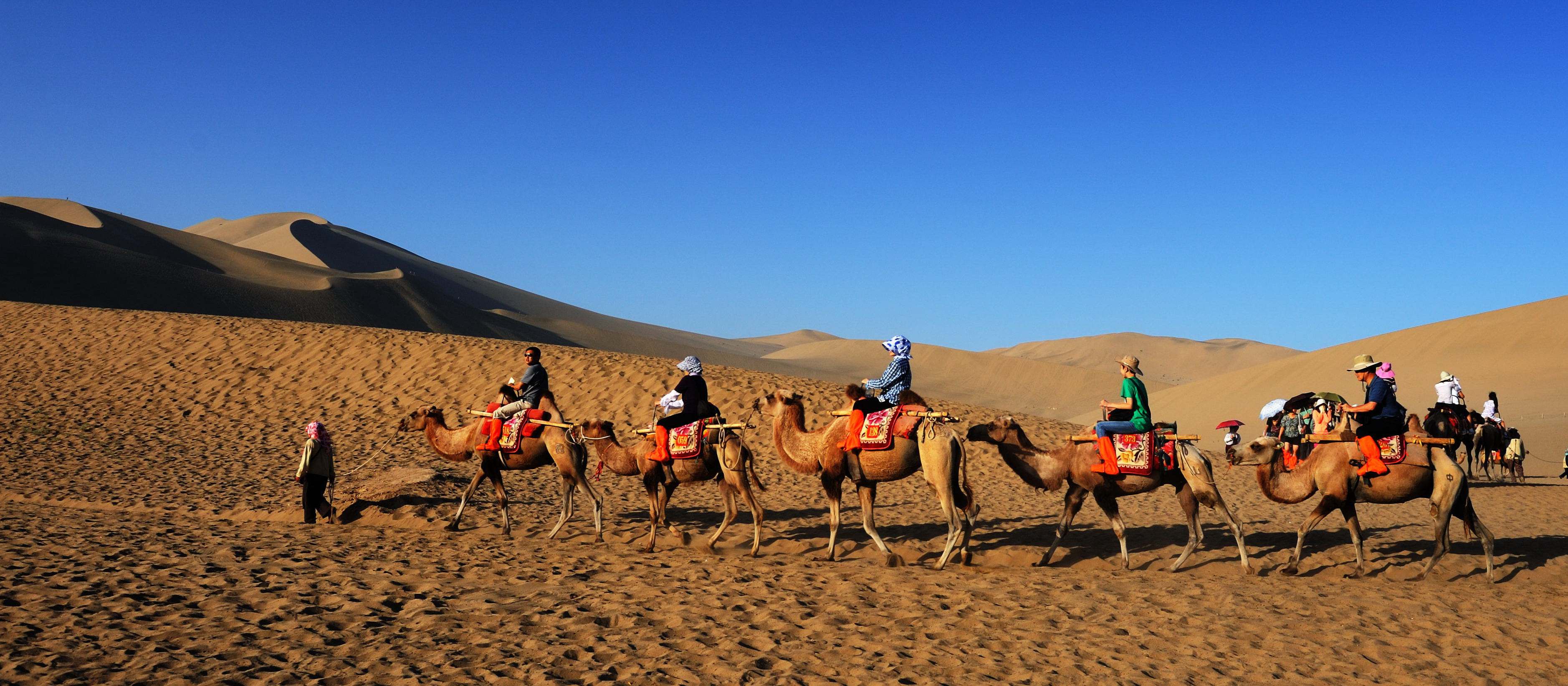
Retrace the footsteps of ancient merchants along the legendary Silk Road. From the bustling bazaars of Kashgar to the stunning Taklamakan Desert, explore how this historic trade route continues to influence the region's diverse cultures, cuisines, and traditions today.
The Silk Road was not just a single path, but a network of trade routes that connected the East and West for over 1,500 years. In Xinjiang, this ancient legacy lives on in the vibrant markets, diverse communities, and stunning landscapes that define the region.
Kashgar, one of the oldest continuously inhabited cities in Central Asia, serves as a perfect starting point for exploring the Silk Road's heritage. The Sunday Bazaar here is a sensory feast—spices, textiles, and handicrafts fill the air with colors and scents that have changed little over the centuries.
Venturing into the Taklamakan Desert, we follow routes that once carried silk, spices, and ideas between civilizations. The desert's name, which means "you can go in, but you can't come out," speaks to the challenges faced by ancient travelers, yet also to the region's enduring mystique.
The cultural diversity along the Silk Road is remarkable. Uyghur, Kazakh, Kyrgyz, and Han communities have all left their mark, creating a rich tapestry of traditions, languages, and cuisines. This cultural fusion is perhaps most evident in the region's food—a delicious blend of Central Asian and Chinese influences.
Today, the Silk Road's spirit of exchange continues through modern initiatives like the Belt and Road, but the ancient routes still offer travelers a unique window into history. Our carefully curated journey takes you to key sites along the route, from ancient caravanserais to modern cultural centers, all while respecting the region's complex history and diverse communities.